
Chicago's Air Ranks Among Worst Globally as Smoke Lingers Into Monday
Canadian wildfire plumes have swept back across northern Illinois, keeping air quality in "unhealthy for sensitive groups" territory. State officials extended the pollution action day as nearly 1,000 active fires rage up north.
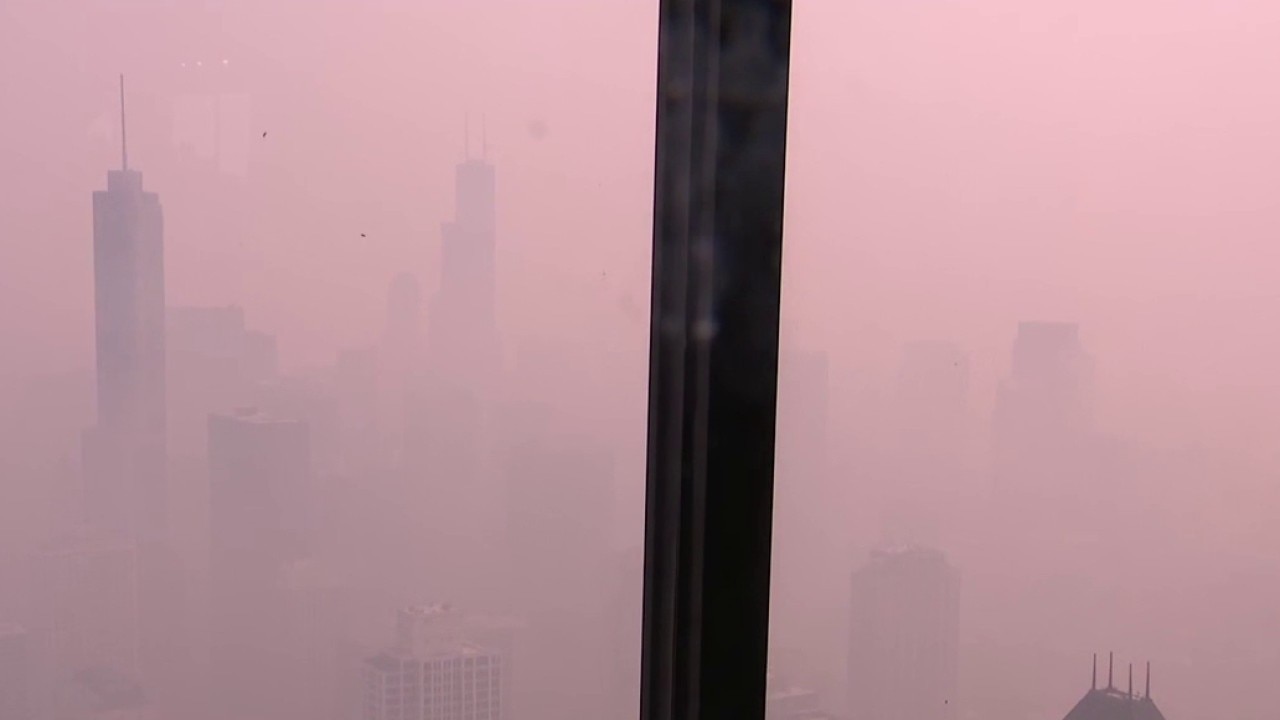
Heavy wildfire smoke obscuring Willis Tower and the downtown Chicago skyline — photo via FOX 32 / Newsroom Archive.
CBS News Chicago reports that while conditions eased from Thursday's extreme spike, Chicago rose to second-worst in the world on IQAir Monday morning, behind only Kinshasa, DRC. Canadian federal officials confirmed active fires have reached nearly 1,000 nationwide.
Read the full storyWTTW details how lightning strikes touched off dozens of active blazes in Minnesota's Boundary Waters and Canada, where dry timber and spruce budworm-damaged balsam fir acted like kindling across the region.
Read the full storyBlock Club tracked the return of smoky haze over the weekend, noting that while scattered rain showers offered brief localized relief, wind patterns continue to channel northern smoke straight into the Midwest.
Read the full storyThe Illinois EPA extended its Air Pollution Action Day through Monday night, cautioning that fine particulate pollution could fluctuate quickly depending on northern wind trajectories.
Read the full storyChicago's skies remain hazy Monday as fine particulate matter from Canadian and northern Minnesota wildfires lingers across northeastern Illinois. The city's Air Quality Index (AQI) hovered near 149 during early morning hours — placing it in the "unhealthy for sensitive groups" category and briefly making Chicago's air the second most polluted of any major city worldwide on IQAir's tracker, behind Kinshasa, DRC.
The Illinois Environmental Protection Agency (IEPA) extended its Areawide Air Pollution Action Day through Monday night. While conditions are markedly better than Thursday's record-breaking spike, meteorologists advise that shifts in wind direction could still draw down additional plumes from Canada later in the week.
Canadian wildfire authorities report nearly 1,000 active fires burning nationwide, covering roughly 11,000 square miles. High temperatures, persistent drought, and dead timber from spruce budworm infestations have fueled aggressive blazes in Ontario, Manitoba, and Minnesota's Boundary Waters Canoe Area Wilderness.
This marks the third consecutive summer that Canadian wildfire smoke has significantly impaired air quality in the Chicago metropolitan area, disrupting summer events, park district programming, and regional travel.
- Monitor AQI in Real-Time: Check AirNow.gov or local weather apps before planning outdoor activities, as levels can shift within hours.
- Wear N95/KN95 Masks Outdoors: Standard cloth masks do not filter micro-particulates ($PM_{2.5}$) found in wildfire smoke.
- Set Car AC to Recirculate: Prevents smoky outdoor air from being drawn through vehicle vents.
- Check HVAC & Purifier Filters: Ensure home furnace filters are clean and rated MERV 13 or higher to capture fine ash particles.
- CBS Chicago — Chicago Air Quality Improves, but Canadian Smoke Lingers
- WTTW News — Wildfire Smoke Casts Haze Over Chicago
- Block Club Chicago — Air Quality Among Worst in the World
- Chicago Sun-Times — Air Quality Warning Extended
- Chicago Park District — Air Pollution Action Day Alerts

Smokey, red-tinted skyline over downtown Chicago during the height of the summer smoke wave.